Management Liability
Management Liability Risk Management
You can protect your organization’s leadership, financial stability, and reputation through a thoughtful approach to Management Liability risk. For many organizations, these exposures are tied to leadership decisions, workplace issues, and employee benefit plan responsibilities. Claims in any of these areas can be costly, distracting, and time-consuming to manage. Helping clients understand these risks, evaluate their coverage structure, and make practical decisions is a core part of the Pacific Horizon approach.
Directors & Officers Liability Protects Leadership Decisions
Directors & Officers Liability exposure often grows out of decisions made by a board, executive team, senior management, or other organizational leadership. Claims may involve allegations of mismanagement, breach of duty, poor oversight, financial decisions, regulatory issues, or other disputes brought by employees, donors, creditors, investors, competitors, or outside parties. Even when a claim has little merit, the cost of responding to it can still be significant.
Employment Practices Liability Addresses Workplace Claims
Employment Practices Liability exposure arises from the way an organization hires, manages, disciplines, promotes, accommodates, or terminates employees. Claims may involve wrongful termination, discrimination, harassment, retaliation, or other workplace-related allegations. For employers with larger staff counts, multiple supervisors, or demanding work environments, these issues can become expensive and disruptive if they are not handled carefully.
Fiduciary Liability Applies to Employee Benefit Plan Responsibilities
Fiduciary Liability exposure is tied to the management and administration of employee benefit plans. Those responsible for overseeing benefits may face allegations involving errors, omissions, poor communication, administrative mistakes, or failure to act in the best interests of plan participants. Even well-run organizations can face claims when benefit decisions or enrollment problems lead to confusion, financial harm, or dispute.
Leadership, HR, and Governance Practices All Matter
Management Liability claims are often shaped by an organization’s internal practices. Board oversight, employment policies, complaint procedures, manager training, documentation, and benefit plan administration can all affect how these claims arise and how well the organization is positioned to respond. Strong internal practices may not prevent every claim, but they can help reduce misunderstandings, improve consistency, and support better outcomes when issues do arise.
Claims Can Be Costly Even Without a Finding of Wrongdoing
One of the most important things to understand about Management Liability is that legal defense alone can be expensive. Claims involving leadership decisions, employment matters, or benefit plan administration often require a formal response and legal support long before liability is ever established. For many organizations, that cost can create real financial strain even when the claim is ultimately resolved in their favor.
A Thoughtful Insurance Structure Supports Organizational Stability
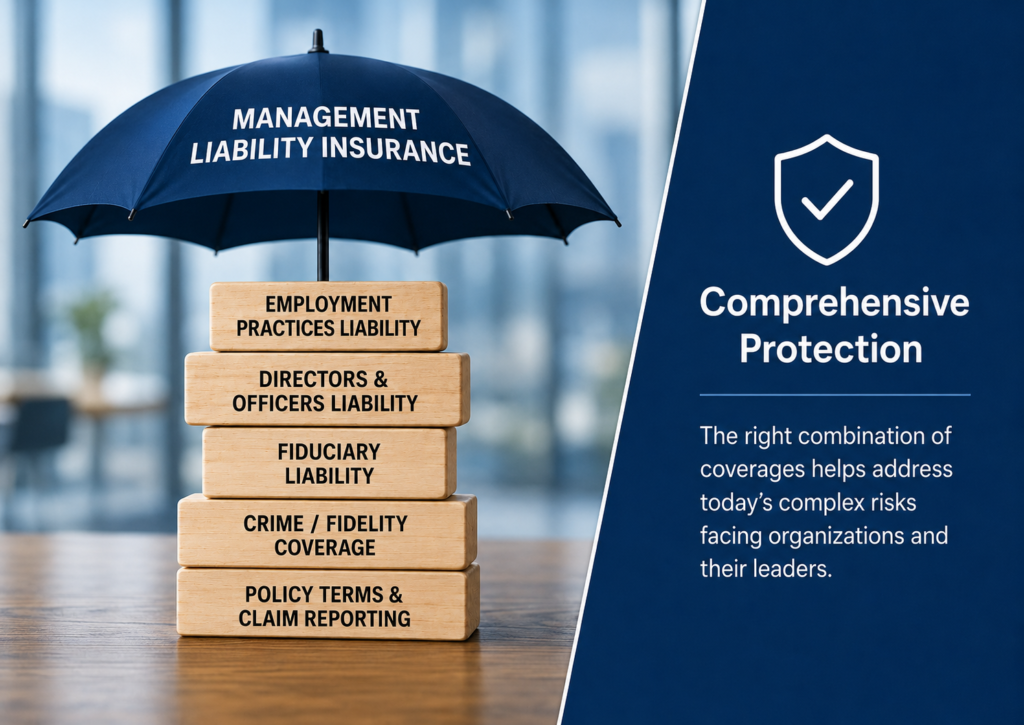
Management Liability coverage works best when it reflects the organization’s actual structure, people, and exposures. Directors & Officers Liability, Employment Practices Liability, and Fiduciary Liability each address a different area of risk, but together they help protect the people responsible for leading the organization, managing employees, and overseeing benefits. Pacific Horizon helps clients review these exposures with care so they can make informed coverage decisions, reduce disruption, and better support long-term organizational stability.
Related Insights & News