Strong driver training and orientation are essential parts of a well-managed commercial auto program. For organizations that transport children, seniors, adults with disabilities, or other vulnerable passengers, hiring qualified drivers is only the beginning. Reducing losses and supporting long-term insurability also require clear expectations, practical training, and ongoing reinforcement.
Experience Is Important
Most organizations should require drivers to have at least three years of prior driving experience before hire. From an insurance underwriting standpoint, however, five years of prior driving experience is often viewed more favorably. Even so, experience alone does not always reflect a driver’s judgment, professionalism, or ability to perform safely within a specific transportation setting.
Orientation Helps Set Expectations Early
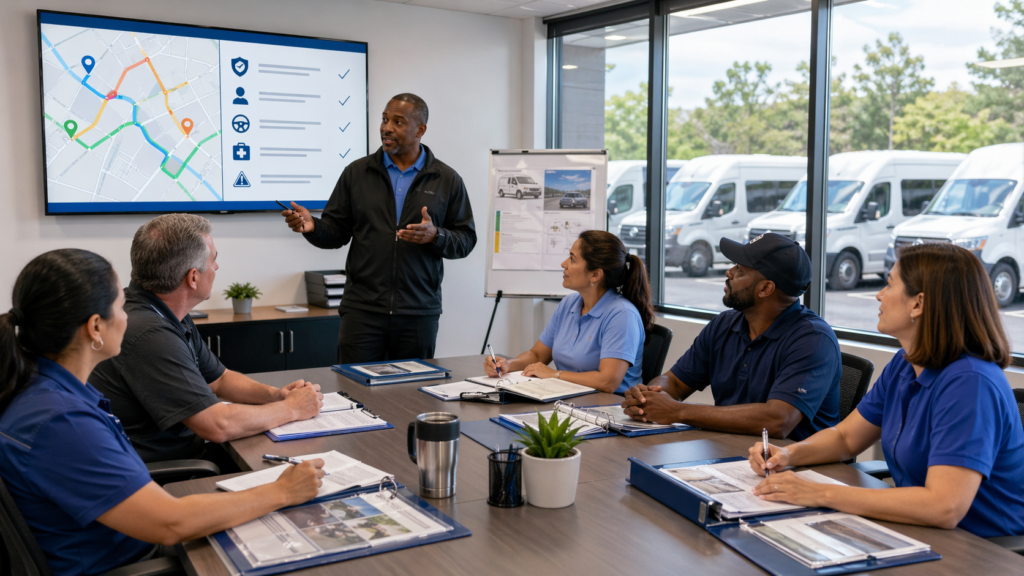
A well-structured orientation gives new drivers a clear understanding of the organization’s safety standards, reporting procedures, vehicle use expectations, and passenger care responsibilities. It also helps establish the importance of professionalism, accountability, and safe decision-making from the start.
Training Should Reflect Real-World Fleet Exposures
Effective driver training should go beyond basic vehicle operation. It should address defensive driving, pre-trip inspections, backing procedures, distraction awareness, accident response, and safe loading and unloading practices. For organizations serving vulnerable passengers, training should also reflect the added care required during transport.
Ongoing Review Supports Safer Performance
Driver training should not end after onboarding. Periodic review, follow-up coaching, and behind-the-wheel observation can help reinforce safe habits and identify concerns before they develop into larger problems. A consistent training process helps support stronger performance across the fleet over time.
Better Training Supports a Stronger Risk Profile
Insurance underwriters often respond more favorably to organizations that combine sound driver hiring standards with formal orientation and ongoing training. A thoughtful approach to driver development can help reduce claim activity, improve accountability, and support a more insurable operation.