Commercial Property
Commercial Property Risk Management
Commercial property insurance is most effective when it is built around the organization’s actual values, operational dependencies, and recovery needs. For those responsible for the organization’s insurance and risk management, the key question is not simply whether property is insured, but whether the coverage structure is strong enough to support recovery after a serious loss. Inadequate limits, overlooked exposures, or unrealistic restoration assumptions can create major financial pressure when the organization is already dealing with disruption. Helping clients assess these exposures and make informed coverage decisions is fundamental to the Pacific Horizon approach.
Property Values and Replacement Cost
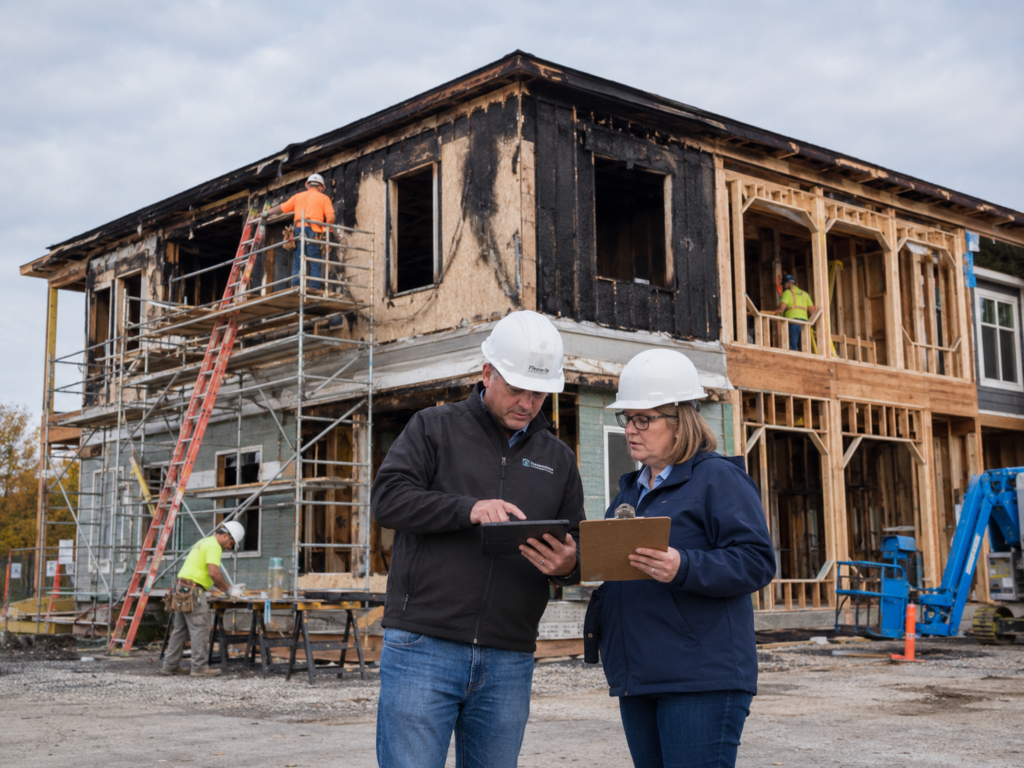
One of the most important parts of commercial property planning is making sure buildings and other insured property are valued appropriately. If limits fall short, a major loss can leave the organization facing significant out-of-pocket cost at the worst possible time. Reconstruction cost, code upgrades, debris removal, and extended repair timelines can all materially affect the amount of insurance truly needed. Pacific Horizon helps clients look beyond a rough estimate and think more carefully about what recovery may actually require.
Business Personal Property and Critical Equipment
Organizations should also evaluate the value of furniture, equipment, computers, tenant improvements, and other business personal property that supports daily operations. In some cases, these assets are essential to keeping services running, even if the building itself remains standing. When business personal property or critical equipment is undervalued or overlooked, the financial effect of a covered loss can be far greater than expected.
Business Income and Operational Continuity
Property losses often involve more than physical damage alone. A fire, water loss, equipment breakdown, or utility interruption can disrupt operations, reduce revenue, delay reopening, displace tenants, residents, or services, and create unexpected extra expense. Business Income and Extra Expense considerations are an important part of assessing whether the insurance program is built to support the organization through a temporary shutdown or prolonged restoration period. Coverage decisions in this area can have a direct effect on cash flow, service continuity, and overall recovery.
Catastrophe and Location-Specific Exposures
Property risk should also be evaluated in light of location. Wildfire, flood, earthquake, windstorm, and other catastrophe exposures can materially affect coverage structure, deductibles, pricing, and overall financial vulnerability. For organizations with multiple locations, each property may present a different set of risks that should be reviewed carefully. A thoughtful property strategy should take into account not only where the buildings are located, but how a catastrophe loss could affect the organization’s broader operations and recovery timeline.
Risk Control and Loss Prevention
A strong property strategy also depends on practical risk management. Fire protection, water leak prevention, equipment maintenance, security controls, and emergency planning can all help reduce loss potential and support a stronger insurance profile. Just as importantly, these efforts can help limit disruption and place the organization in a better position when an incident does occur. Pacific Horizon helps clients think through these issues as part of a broader effort to align coverage decisions with real-world property risk.
A thoughtful property program does more than insure buildings. It helps protect financial stability, support continuity, and reduce costly surprises when a serious loss occurs. Pacific Horizon works with clients to review these exposures carefully so property coverage is better aligned with the organization’s actual risks, recovery needs, and long-term stability.
Related Insights & News